
The WARD project
The WARD project was founded through a collaboration between the Technical University of Denmark (DTU), Bispebjerg Hospital and Rigshospitalet. It is a research and innovation project led by the anaesthesia departments at Rigshospitalet and Bispebjerg Hospital. It comprises research projects investigating the product of the commercial spinout, WARD Clinical Support System (WARD-CSS), a technology for continuous monitoring of patients’ vital signs. The system is accessible through the WARD app, which provides healthcare professionals with relevant patient monitoring data. The research focuses on monitoring high-risk patients in hospitals and at home. It investigates how continuous monitoring can help detect early signs of clinical deterioration, improve patient safety, and support clinical decision-making.
The projects are conducted in collaboration with national and international hospitals and research institutions.
24/7 in-hospital monitoring
Research and innovation projects within the WARD project investigate how continuous, 24/7 measurement of vital signs such as heart rate, oxygen saturation, respiration rate, and blood pressure, including alerts for important deviations, can provide detailed insight into how patient deterioration develops. This includes gradual or subtle changes that may not be captured through routine intermittent measurements by hospital staff.
By following patients continuously over time, the research enables identification of early physiological patterns associated with worsening condition across different patient groups and care settings. This may allow more efficient use of resources and the ability to give attention to the patients in special needs while at the same time keeping an eye on the remaining patients.
Home monitoring
This solution can also be used for home monitoring after hospital discharge. Through the WARD HOME and WARD-EU projects, researchers study how patients can be monitored at home while their vital sign data remain available to healthcare professionals. This supports clinical follow-up outside the hospital and identify potential deterioration at an early stage. Home monitoring may reduce the need for hospital visits and admissions, ease pressure on hospital capacity, and reduce patient transportation time, while maintaining patient safety at a level comparable to in-hospital care.
Our patient journey
From 50 participants in the first study to over 1000 in clinical trials and 1600 patients included
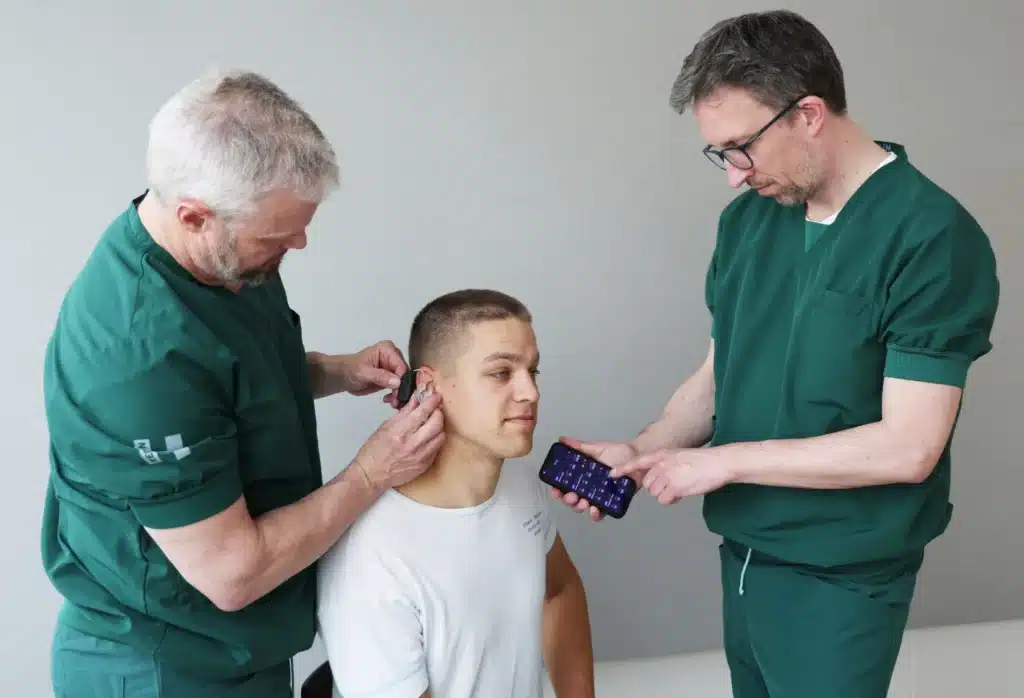
Our aim
Our aim is to prove complete clinical trials to document improved early detection of clinical deterioration in high-risk patients through continuous monitoring in hospitals and at home. By getting a more complete understanding of patient status, the WARD project seeks to support safer care and improved patient outcomes.
Recent news
Here is the latest news about the WARD project
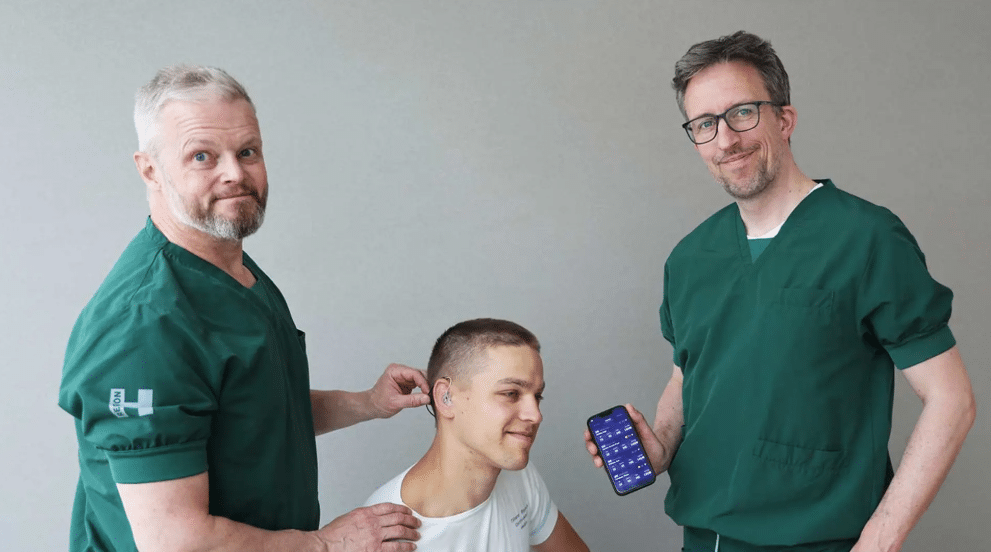
WARD study gains attention in Danish science media
Danish science media sharing WARD results from study showing reduction of postoperative complications with continuous monitoring....
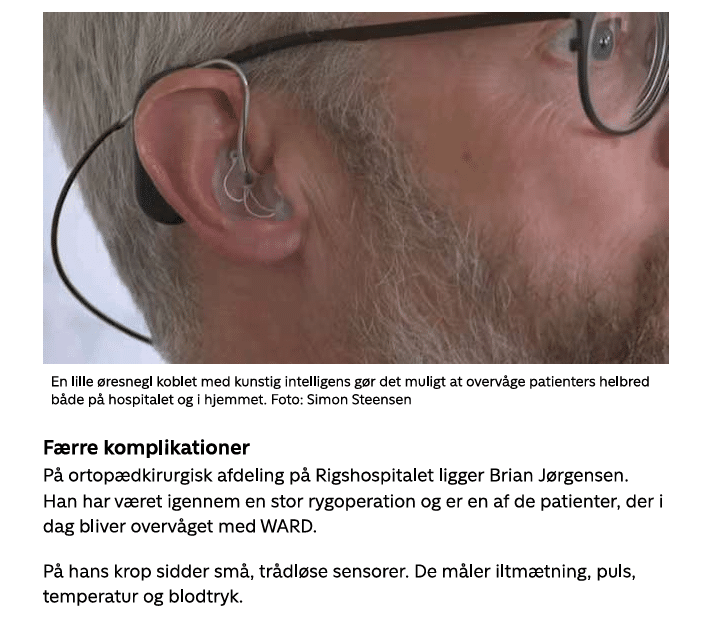
TV 2 reports on new WARD equipment
WARD’s latest project involves newly invented equipment which is covered in this article by TV2 TV2...
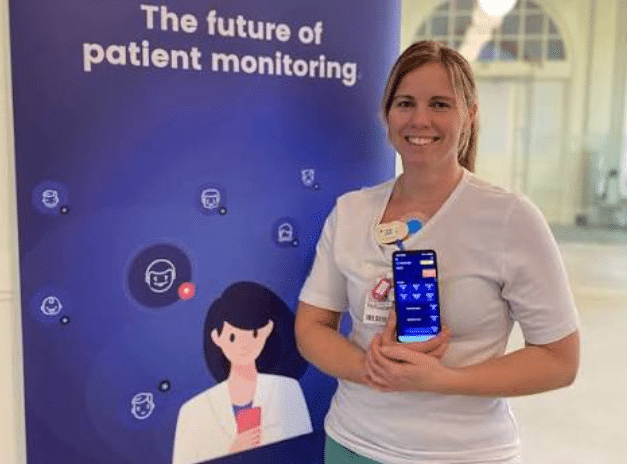
WARD is featured in COPI, highlighting the positive impact of AI on both patients and nurses
An article from COPI about WARD’s use of AI and the positive effects it brings for...
Our founders
Eske Kvanner Aasvang
MD, DMSc, Professor

Christian S. Meyhoff
MD, PhD, Professor

Helge Dissing Sørensen
MSc, PhD, Associate Professor
WARD Clinical Support System
The WARD research led to the development of a commercial spinout offering the WARD Clinical Support System. The system supports continuous monitoring of patients’ vital signs and provides healthcare professionals with information about changes in patients’ conditions.
Learn more about the WARD Clinical Support System at ward247.com